S&P maintains Macomb County’s AAA bond rating

by Don Brown on August 16, 2011

Macomb County announced that Standard & Poor’s (S&P), a leading Wall Street bond rating agency, has affirmed Macomb County’s AAA bond rating and has given the County a “stable outlook.”

 “I am very pleased with our rating,” Hackel said. “We are going against the grain considering the downward trend for other government entities in our region and across the country.”

Hackel noted that the AAA rating is the highest given by S&P and indicates that Macomb County has an extremely strong capacity to meet its current and future financial commitments.

The rating affirmation is based on a recent conference call between S&P analysts and members of the County’s Finance Department and Public Works Department. “It reflects the agency’s recognition of the County’s strong budgetary and fiscal management practices,” Hackel said. “S&P has given Macomb County a strong vote of confidence in the County’s ability and approach to managing its financial operations.”

He saluted Public Works Commissioner Anthony V. Marrocco and Treasurer Ted Wahby for their astute financial leadership and their steady hands in challenging economic times.

“S&P has acknowledged our strong strategic direction and strict financial controls,” Hackel said. “This rating gives us the ability to obtain the lowest interest rates possible in the bond markets if needed.”

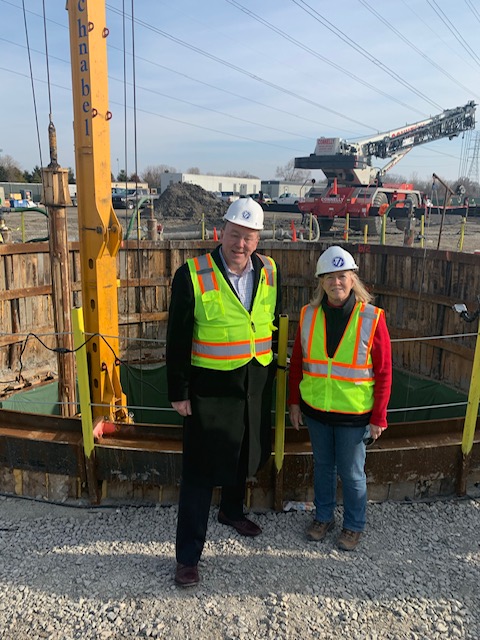
For example, the AAA rating means taxpayers will pay less interest to finance bonds on construction projects, such as the Public Works Department’s upcoming $30 million Clintondale Pump Station improvement project in Clinton Township.

“It’s real great news that we have been reaffirmed as having an AAA rating,” said Public Works Commissioner Marrocco. In the 60 years that Macomb County has been pledging its full faith and credit behind drain bonds, no local municipality has ever defaulted on a bond payment and the County has never had to advance funds for a debt service payment. “Our unblemished bond payment record over six decades is a major factor in the S & P rating”, added Marrocco.

The following is a summary of S&P’s rationale for assigning Macomb County the highest possible rating:

o Deep economic base and participation in the Detroit metropolitan area, though challenged by the current economic downturn and job losses;

o Maintenance of very strong general fund reserve levels, despite challenges posed by this current revenue climate;

o Strong management practices;

o Additional liquidity found in the delinquent tax revolving fund; and

o Moderate debt burden at $3,336 per capita and 5.2 percent of market value, with limited future capital needs.

Hackel said S&P was also in favor of the County’s new two-year budget cycle that is being implemented this year, noting that it will allow the County “to anticipate the short-term effects of financial decisions” as well as Treasurer Wahby’s investment policy that generates quarterly reports on investment holdings and performance.

“The report clearly recognizes the economic challenges that we face in the future,” Hackel said. “However, the agency believes our strong fiscal management and willingness to make budget adjustments to address any gaps created by an economic downturn positions us very strongly.”

{ 0 comments }

Board of Commissioners save Water Quality Board

by Don Brown on July 29, 2011

I and my colleagues voted to keep the citizen’s led Water Quality Board in the county’s organization plan.  I believe this will add value for the Executive’s Water Advisory Board he created which is addressing other important economic issues surrounding our lakes and rivers here in Macomb County.  See the article below.

The Macomb Daily (macombdaily.com), Serving Macomb County


News

Water Quality Board saved

Friday, July 29, 2011

By Jameson Cook
Macomb Daily Staff Writer

County board defies Hackel, who wanted water advisory council

County commissioners saved the Macomb County Water Quality Board while they voted Thursday to approve virtually every other part of the county executive’s organizational plan.

The board by a 12-0 vote (one commissioner was absent) went along with the county Board of Commissioners Operational Committee’s vote Tuesday to approve the plan except for Executive Mark Hackel’s proposed elimination of the Water Quality Board, created in the 1990s to protect the county’s waterways.

The vote occurred after minimal discussion, as opposed to Tuesday’s committee meeting that featured spirited debate.

Board members were concerned that Hackel’s replacement of the nine-member WQB with his 22-member Water Resources Advisory Council would reduce residents’ ability to make complaints; the WQB is subject to the Open Meetings Act whereas the Advisory Council may not be subject to the OMA. However, the board also voted Thursday to ask a state lawmaker in the Macomb County delegation to seek an Attorney General’s opinion on whether it is subject to public scrutiny. Hackel’s attorney, Corporation Counsel George Brumbaugh, and the board’s attorney, Andrew Richner, have provided differing opinions to the board.

The WQB’s apparent reprieve was met with cautious optimism Thursday night from board Chairman Doug Martz. “I’m happy we got a reprieve,” he said. “I just hope it has a function in the future.”

The board has operated on a shoestring budget of less than $5,000 per year funneled from the county, but Martz said it has been influential in fighting for clean water and obtaining millions of dollars in grants to help government reduce pollution, such as sewage overflows.

Al Lorenzo, a top official for Hackel who attended the meeting, said afterward that the board has virtually disbanded in recent months, but that officials must now reconsider how it and the advisory panel may function.

“Given the action of the board, we need to look at what this means in practice,” he said.

Hackel has said he fully supports protecting and touting the county’s water resource, and wants to increase water tourism.

Martz acknowledged that five of the WQB’s nine members are no longer on the board, which last met June 14. Three terms expired and two people resigned, so five people would have to be appointed.

Lorenzo argued that under the new form of government, residents can complain directly to the county executive instead of going to the WQB.

“If members of the public have a concern, there’s already a place for them to go on a daily basis — the county executive,” he said. “The reason we don’t need a Water Quality Board or the other three commissions (Hackel also eliminated the Historical Commission, Juvenile Justice Advisory Board and Commission on Women) was they no longer fit in the new form of government.”

Another reason Hackel proposed eliminating the board was because of a conflict — the board was created to advise the county board, but its members are to be appointed by the executive.

Commissioner Fred Miller, D-Mount Clemens, said he hopes Hackel’s council and WQB can co-exist.

“The executive can set up whatever advisory panel he wants,” he said, noting that the WQB can focus more on environmental protection while the council can also look in other areas such as tourism and recreation.

Miller was one of two commissioners who voted against Hackel’s plan, arguing the plan lacked imagination.

“I support the new county government and the reorganization of county government,” Miller said. “(But) I think we’re really missing an opportunity here in that it lacks imagination. This was our opportunity to remake government and reform it, and we missed the opportunity.”

He said he opposed Hackel eliminating the WQB and three other citizen groups that help serve the needs of residents. At the same time, he said, the plan also increased administration, which doesn’t serve taxpayers.

Hackel, however, has touted his plan he says reduces the budget deficit by $2.5 million.

Lorenzo noted that virtually all of Hackel’s plan was approved.

“I don’t think any executive could expect 100 percent to get approved by the legislative body,” he said.

URL: http://www.macombdaily.com/articles/2011/07/29/news/doc4e32264af3042160097362.prt

© 2011 macombdaily.com, a Journal Register Property

{ 0 comments }


News


Macomb County

Board of Commissioners


____

FOR IMMEDIATE RELEASE Media contact: Lisa Martino

June 14, 2011 (586) 469-5713 Lisa.Martino@macombcountymi.gov

Settlement Reached to Restore Macomb Orchard Trail

MOUNT CLEMENS, Mich. — The Macomb County Board of Commissioners and Macomb County Orchard Trail Commission, in concurrence with the Office of the County Executive, today announced that a settlement has been reached with International Transmission Co., (ITC) over access to power lines running along parts of the county’s Macomb Orchard Trail.

The agreement states ITC will pay the county $500,000 for a vegetation easement along the Macomb Orchard Trail. It will also replace vegetation along portions of the trail in Shelby and Washington townships, where the power company will be trimming, cutting, and removing trees. ITC will also repair any damage to the trail caused in the process of trimming around power lines.

The line, which runs adjacent to a portion of the 24-mile-long Macomb Orchard Trail, has been at the heart of a three-year stand-off between residents, local and county officials, the Macomb Orchard Trail Commission, and the power company, which crossed private property to clear-cut trees that it said interfered with the operation of its power lines along the trail.

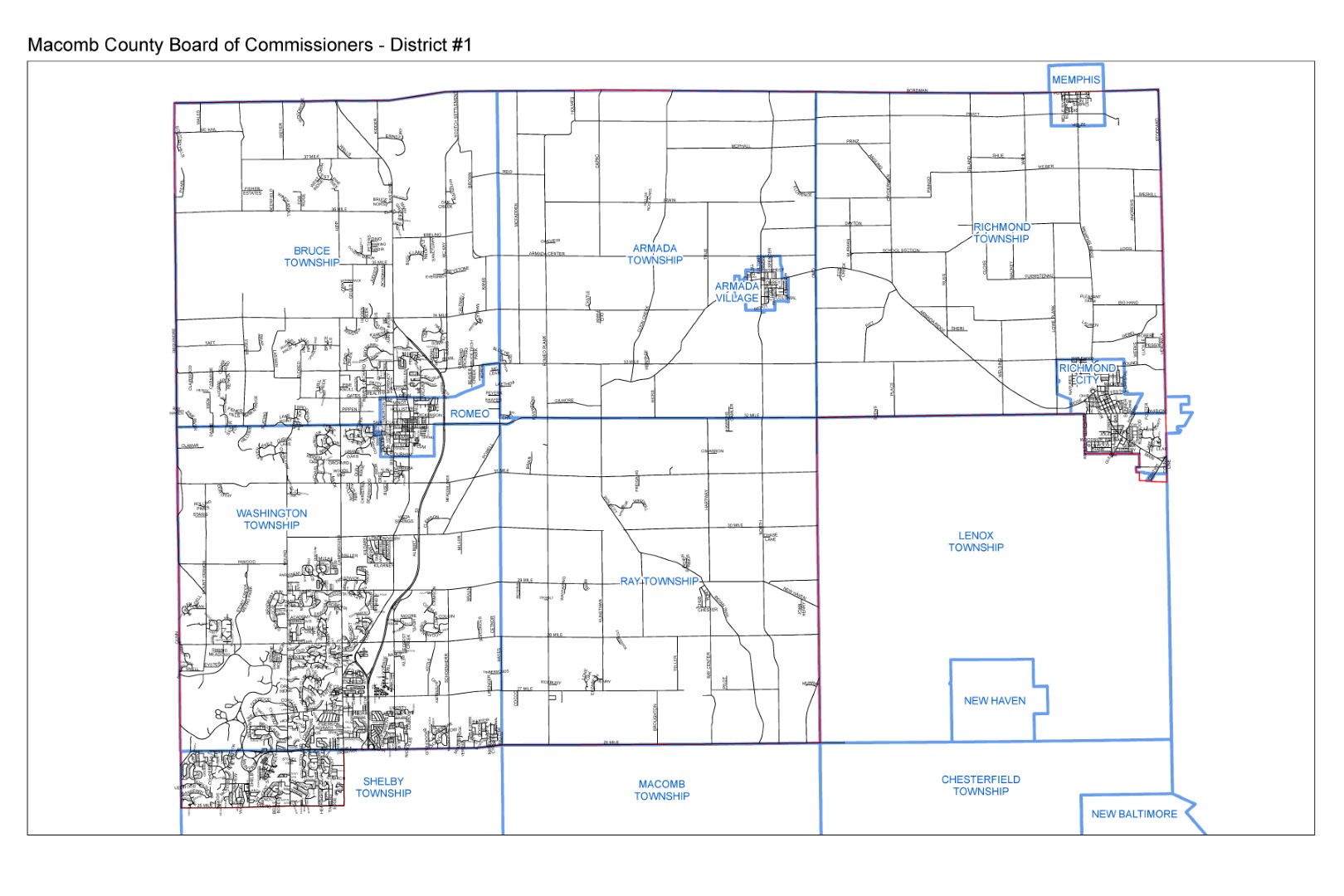
Macomb County Commissioner Don Brown, who represents Washington Township, said the settlement allows for re-forestation of the trail with compatible vegetation, ensures proper compensation for the easement, and allows the power company access to Macomb County’s Jewell-Spokane electrical transmission path.

It also insures an abundant supply of electrical energy is present to avoid endangering the health and welfare of nearby residents and business served by the power line, said both Brown, and Board of Commissioners Chair, Kathy D. Vosburg.

“We called a special Board of Commissioners meeting to deal specifically with this issue,” Vosburg said. “Once a decision was reached among members of the Board, we moved expediently and responsibly to make sure all electrical power needs would be met.”

Brown, who also serves on the Macomb Orchard Trail Commission, has been a leading advocate of the trail’s creation and development. He said the agreement avoids a costly and potentially lengthy court battle, but is little consolation to those who use the trail, or to residents who came home to find trees in their yards being cleared without warning.

“We negotiated in such a way that homeowners and the county would be treated with the respect and courtesy we deserve,” he said. “We hope this sends a message to anyone doing business in Macomb County that our residents’ rights can not be disregarded, and that we value and protect county assets such as the Macomb Orchard Trail.”

###

For more news from the Macomb County Board of Commissioners, check

www.MacombBOC.com

or visit us on Facebook.


{ 0 comments }

News


Macomb County 

Board of Commissioners                                                     

FOR IMMEDIATE RELEASE                                                                          Media contact: Lisa Martino

June 8, 2011                                                                                                              (586) 469-5713
                                                            Lisa.Martino@macombcountymi.gov                                                 


Finance Committee Hears Latest Report from Department of Roads

MOUNT CLEMENS, Mich. — The Macomb County Board of Commissioners Finance Committee this week hosted a presentation from the Macomb County Department of Roads which showed essential costs on the rise, and a decrease in Michigan Transportation Funds (MTF) and manpower for the department.  

While the Department of Roads now falls under the supervision of the County Executive, the Board of Commissioners continues to have final approval of its budget. During FY 2011, MTF monies — used for road maintenance and construction expenses  — show a  decrease from $35.7 million to $34.6 million, while the projected cost of one ton of salt for FY 2011 doubled in the past five years to $48.55/ton,  officials told the committee.

The creative challenges associated with leveraging similar factors will be evident as the county balances the department’s FY 2011-12 budget, Finance Committee Chair Don Brown noted.


“The Department of Roads is facing a challenging year ahead when it comes to doing more with less, and the board offers its support as we all continue to navigate through rough financial waters,” Brown said. “I am confident that solutions will be implemented as the department finds its way under the new county structure, and I commend it for a job-well-done thus far.”

The department also shared news about a 100-percent federally-funded program to complete $10 million in traffic signal modernization/upgrades though out the county this year.  It is also in the process of combining its in-house finance, human resources, information technology and purchasing departments with those used by other county departments, Director Bob Hoepfner said.

###

                For more news from the Macomb County Board of Commissioners, check www.MacombBOC.com

or visit us on Facebook.

{ 0 comments }


News


Macomb County

Board of Commissioners

FOR IMMEDIATE RELEASE Contact: Patti Dib

June 2, 2011 (586) 469-6484

Patti.Dib@MacombCountyMi.gov

Veterans Affairs Commission Seeks to Fill Two Vacancies

MOUNT CLEMENS, Mich. — The Veterans Affairs Commission of Macomb County is seeking to fill two vacancies on the Commission for terms ending July 31, 2015. Residents of Macomb County who have served honorably on active duty or those who have served actively in a U.S. war may apply for the appointments.

State law mandates that no more than two of the five members serving on the Commission be representative of a single war. Commission membership currently consists of two members representing the Gulf War, and one from Vietnam.

The Macomb County Veterans Service Commission meets on the first Wednesday each month. The commission oversees the Veterans Services Department, reviews new benefits offered by the federal government, and reviews applications for the $300 burial allowance.

All applications for appointment must be accompanied by a letter of support and endorsement from a chartered veterans group in Macomb County. Applications are available on the Macomb County website, www.macombcountymi.gov, (under the Boards and Commissions link) or at the Veterans Services Department, located at 21885 Dunham Road, Suite 3, Clinton Township.

Applications should be submitted to the Macomb County Board of Commissioners by July 8, 2011. The appointments will be considered at the July 19 meeting of the Board Operations Committee.

For more information, call Veterans Services at (586) 469-6507.

###

For more news from the Macomb County Board of Commissioners, check www.MacombBOC.com or visit us on Facebook.


{ 0 comments }


MOUNT CLEMENS, Mich. — The Public Safety Committee this week approved a grant match of $344,209 for the continuation of the Macomb Auto Theft Squad (MATS) program in Macomb County. The grant will assist with numerous types of auto theft, fraud, and vehicle recovery efforts.

In 2009, MATS recovered 190 vehicles value of $1.8 million and made 324 arrests. In 2010, the program recovered 174 vehicles with a recovery value of $1.9 million and made 255 arrests. Year-to-date, MATS has recovered 238 vehicles with $933,000 in recovery value, and 133 arrests have been made.

“Clearly, this program works, and is a benefit to our residents,” said Public Safety Committee Chair Phil DiMaria. “Any opportunity we have to help eradicate crime or fraudulent behavior, I think we should take, and I fully support ongoing funding of this program.”

MATS is a cooperative task force comprised of the Macomb County Sheriff’s Department, Michigan State Police, and police departments from Clinton Township, St. Clair Shores, Sterling Heights and Warren. It is funded in part by The Automobile Theft Prevention Authority of the State of Michigan (ATPA), Macomb County, and law enforcement agencies with officers assigned to the squad.

The grant renewal covers October 1, 2011 to September 30, 2012. The funding match will be forwarded to the May 24 Finance meeting for further consideration by the Board of Commissioners.

###

For more news from the Macomb County Board of Commissioners, check www.MacombBOC.com or visit us on Facebook.


{ 0 comments }


MOUNT CLEMENS, Mich. — After hearing an alarming status report on the dwindling funding for Macomb County’s drinking water monitoring system, the Board of Commissioners is calling for the county’s partners in the St. Clair River, Lake St. Clair, Detroit River Drinking Water Protection Network to join efforts to ensure that funding for the system continues.

During a special Finance Committee meeting held Monday, commissioners learned that funds for the state-of-the-art, real-time network — which provides early detection of source water contamination from chemical spills and other pollutants for nearly three million people — could be depleted as early as December 2011.

“We’ve developed a world class system to protect the public from potentially deadly sources of contamination, and we need to do all we can to make sure we keep providing this crucial service,” said Finance Committee Chair Don Brown. “It’s up to the communities who use the system to come together and figure out how to keep it going, and we need to act soon.”

The system, which developed in 2006, has been funded through a combination of sources at the federal, state, local and private levels with a $3.4 million investment to date. It is currently operating at “bare minimum” at a cost of $210,000 per year, with no funds for equipment replacement, data analysis, or technical consultants, officials said. It is estimated that a fully operating system would cost between $500,000 and $1 million per-year to run. The drinking water from the St. Clair/Detroit corridor is distributed to most of Wayne County (including the City of Detroit), the City of Flint, portions of Washtenaw and Lapeer counties, and Oakland and Macomb counties.

Brown said he will work in conjunction with the Office of the County Executive to call a meeting with leaders from communities served by the network in order to explore a feasible source for future funding.

###

{ 0 comments }

It’s Past Time for Pension Reform

by Don Brown on March 13, 2011

Some on the Macomb County Board Commissioners have been calling for pension reforms for years, only to have them largely ignored by the labor backed majority.  The last serious effort was in 2006 when as Budget Committee Chairman I initiated a study to find a cost effective way to provide a reliable pension benefit for our employees.  Unfortunitally that effort was also not supported.  Today the economic situation has grown worse than it was in 2006 and the predication of unsustainable costs has come true.  As our county balances its budget with limited revenue, a larger percentage of tax dollars are being directed to cover pension costs, at the expense services and staff which will have to be cut.  As the Finance Chairman of the current Board of Commissioners I will resume efforts to work with our employee unions and colleagues to bring meaningful pension reform.  Below is an article covering my first Finance Committee and that effort will continue at my next  committee meeting on 22nd of this month.     


Macomb County commissioner says it’s time to pursue pension fund cuts

Wednesday, February 16, 2011

By Chad Selweski
Macomb Daily Staff Writer

Tax revenues will continue to dive, board warned

Macomb County’s pension fund remains financially strong, despite three years of pounding economic hits, but property tax revenues will continue to fall until 2013, requiring even more county budget cuts.

That was the mixed message presented to the Board of Commissioners on Tuesday, a warning which also sounds the alarm for all Macomb cities, townships and school districts that are looking for relief from falling property values.

The two reports presented to the board prompted one key county commissioner to declare that cuts in the pension fund should be pursued to avoid future budget deficits.

A long-range report from the county’s property equalization department projects that the drop in property tax revenues this year will be 10 percent, matching last year’s fall. Because of a lag time between market prices and the establishment of the tax rolls, Equalization Director Steve Mellen is predicting a 7.5 percent drop in tax revenues in 2012 before a modest increase of 1.4 percent in 2013.

“What’s interesting to me,” said county board Chairwoman Kathy Vosburg, “is that when you look all the way out to 2020, with state equalized value at $31 billion, we’re still nowhere near the all-time high of $38 billion in 2007.”

The SEV Vosburg referred to represents 50 percent of the market value of all properties in the county. Commissioner Don Brown, chair of the board’s Finance Committee, suggested that the sluggish gains in property values over the next two decades may reflect a “new normal” for Macomb County.

The previous 2009-10 county board approved a balanced budget for 2011 after making several cutbacks, but county Executive Mark Hackel has disputed those figures, saying that his advisers have warned of millions of dollars in red ink over the next several months.

At the same time, an actuarial consultant told the board that the county pension fund is in excellent shape, particularly after the housing and credit crises of 2008-09 that led to a plummet in the stock market.

Cathy Nagy of Gabriel Roeder Smith and Company told the commissioners that, as of Dec. 31, 2009, the most recent figures available, the overall pension system was funded at 106 percent of the necessary projected payouts for current and future retirees.

Only the Department of Roads’ portion of the $800 million pension system is less than fully funded — at 98 percent — which reflects a solid system compared to many of Gabriel Roeder Smith’s 800 clients.

“This reflects the market meltdown of 2008,” Nagy said, “so … this is a very well-funded plan and it’s probably one of the best-funded plans that we work with.”

Nonetheless, Brown said that “everything’s on the table” as the county begins new contract talks with all of its labor unions. With $16 million of the overall budget going toward pension costs, substantial reductions could preserve services for the public, said the Washington Township Republican.

“We need significant pension reform going forward,” he said after Tuesday’s Finance Committee meeting.

The actuarial report presented by Nagy showed that Macomb spends 9 percent of its payroll costs on general county employees’ pension fund; 15.7 percent at the Sheriff’s Office; 15.1 percent at the Roads Department; and 8.2 percent at the Martha T. Berry Medical Center.

The employee contributions to the retirement system are: 3.5 percent of pay for general county employees; 2.5 percent to 3.5 percent at Martha T. Berry, depending on a worker’s hiring date; 3.5 percent for road workers; and 4 percent at the Sheriff’s Office.

In other action, the Finance Committee set Hackel’s salary at $139,772, the minimum allowed under the voter-approved county charter. That pay figure is eight times the annual salary earned by the lowest-paid, full-time county employee.

As required by the charter, the commissioners set Hackel’s pay for the length of his 4-year term, choosing to keep it at the current rate through 2014.

URL: http://www.macombdaily.com/articles/2011/02/16/news/doc4d5b58ee58d9a359224471.prt

{ 0 comments }

Time for Regional Control of DWSD

by Don Brown on February 12, 2011

A Resolution in Support of the Formation of an Interim Regional Management Committee Of the Detroit Water and Sewerage Department


Commissioner Don Brown, On Behalf of the Entire Board of Commissioners, Offers the Following Resolution:

WHEREAS the governance of pUblic institutions should be based on the guiding principles of integrity, legitimacy, fiduciary responsibility, accountability, as well as fair and equitable representation; and

WHEREAS currently the Detroit Water Board is composed of seven members, appointed by the Mayor of the City of Detroit, that includes four Detroit representatives and one member (appointed by the Mayor of Detroit) each from Oakland, Wayne and Macomb Counties; and,

WHEREAS the Detroit Water and Sewerage Department (“DWSD”) serves 126 suburban communities in eight counties, with more than 75 percent of its 4.3 million water and sewer customers residing outside of Detroit; and,

WHEREAS, despite aver 30 years of “receivership” over Detroit Wastewater Treatment Ptant (‘WWTP”) and DWSD system by the federal District Court, there have been countless violations of state and federal law, breaches of the orders of the court, breaches of contract, and abuses by the existing governing structure; and,

WHEREAS, in 2010 the State of Michigan again issued a notice of violation of the federal Clean Water Act to the City of Detroit that will result in repairs to the DWSD WWTP estimated to cast the rate payers in (he City of Detroit and Suburbs between $100 Mitlion and $200 Million; and,

WHEREAS, recent indictments of the former Detroit City Mayor Kilpatrick, former DWSD Director Mercado and failed DWSD leadership requires action to protect the city and suburban rate payers; and,

WHEREAS, from time-to-time. legislation has been introduced with the intent to try to address the concerns of the region; and,

WHEREAS, although legislation may be a long-term remedy for addressing a more permanent governing structure for the DWSD system, short-term measures are necessary in order to protect the immediate interests of [he region; and,

WHEREAS, in the short-term the proposal recommending the formation of an Interim Regional Management Committee (“IRMC”) comprised of the Mayor of the City of Detroit (or his designee), the Public Works Commissioner of Macomb County, the Water Resources Commissioner of Oakland County, the Wayne County Director of Department of Environment and a person designated by the federal court, with broad powers to control, manage, and operate the WWTP and DWSD, should be created by the federal District Court 10 ensure sustained compliance with the federal Clean Water Act and other orders of federal court; and,

WHEREAS that the IRMC will provide a short-term governing structure that will restore confidence to the region, providing appropriate oversight, greater accountability. cost savings, transparency and efficiencies for all of the rate payers within the region.

NOW THEREFORE BE IT RESOLVED that the Macomb County Board of Commissioners support the request to the federal court in the formation of an Interim Regional Management Committee (“IRMC”) comprised of the Mayor of the City of Detroit (or his designee), the Public Works Commissioner of Macomb County, the Water Resources Commissioner of Oakland County, the Wayne County Director of Department of Environment and a person designated by the federal court, with powers to control, manage, and operate the WWTP and DWSD, to ensure compliance with the federal Clean Water Act and other orders of federal court.

BE IT FURTHER RESOLVED THAT copies of this adopted resolution be forwarded to the Governor of the State of Michigan, federal Districl Court JUdge Sean Cox, the Mayor of the City of Detroit, the County Executives for Wayne and Macomb Counties, Oakland County Water Resource Commissioner, Wayne County Director of Environment, Macomb County Public Works Commissioner, the Macomb County delegation to the state legislature, the Michigan Association of Counties, the Michigan Municipal League and Macomb County’s legislative lobbyists.

{ 0 comments }

Board of Commissioners Names Committees / Chairs

by Don Brown on February 2, 2011

 MOUNT CLEMENS, Mich. — Macomb County Board of Commissioners Chair Kathy Vosburg today announced seven newly formed committees to be approved at the January Full Board meeting.

 Six of the committees will meet prior to each month’s Full Board. They are: Finance (Committee of the Whole), Board Operations (Committee of the Whole), Economic Development, Public Safety, Courts, Health and Human Services, and an Audit committee, which will meet as needed. The committees act as specialized work groups for the Board, enabling it to function more efficiently.  “We have a very knowledgeable and motivated group of commissioners on each of these committees,” said Board of Commissioners Chair Kathy Vosburg. “Each Chair was carefully chosen because he/she brings a key element that can build on everyone’s strengths to successfully move the group forward as a whole.”

Committee leadership and meeting schedules are as follows:

 · Finance — Chair: Don Brown, Vice Chair: Fred Miller. Committee Chair Brown was chosen for his past experience as a Budget chair, and his professional experience with a cross-section of government. Commissioner Miller brings his expertise in government funding and the legislative process as a result of a successful career in Lansing as a State Representative.

 · Board Operations — Chair: Kathy Tocco, Vice Chair: Jim Carabelli. Committee Chair Tocco brings her past experience as the Board’s Vice Chair and perspective gained as a practicing attorney. Commissioner Carabelli offers his experience as a former township official and know-how as a successful business owner.

· Economic Development — Co-chairs: Jim Carabelli and David Flynn. Cocommittee Chair Carabelli served as a co-chair of the former planning and Economic Development Committee and brings institutional knowledge of the groundwork laid in this vital area. Co-committee Chair Flynn served as Vice Chair of the former Planning and Economic Development Committee, and as a result, also contributes relevant experience to this committee.

· Public Safety — Chair: Phil DiMaria, Vice Chair: Joe Sabatini. Committee Chair DiMaria brings a long career in law enforcement and experience chairing a similar committee to his new role.

· Courts — Chair: Ray Gralewski, Vice Chair: Marv Sauger. Committee Chair Grawleski offers to this committee a fresh perspective as a new commissioner,  as well as an eagerness to be involved in county operations.

· Health and Human Services — Chair: Toni Moceri, Vice Chair: David Flynn.  Committee Chair Moceri offers experience as Vice Chair of the former Senior Services Committee, and has a history of extensive community involvement to add to her leadership role.

 · Audit — Chair: Roland Fraschetti, Vice Chair: Toni Moceri. Committee Chair Fraschetti brings knowledge as a past commissioner and investment experience to his new role on this committee.

The list of committees will go before the Full Board for its approval at its next meeting at 7 p.m. January 20, on the 9th Floor of the Administration Building, 1 S. Main, Mount Clemens. Once a schedule is approved, meeting dates will be available online at www.macombcountymi.gov.

###

{ 0 comments }